China Top 10 Electric Ball Valve Manufacturers?

Time:2026-10-22 Author:Mason
0%

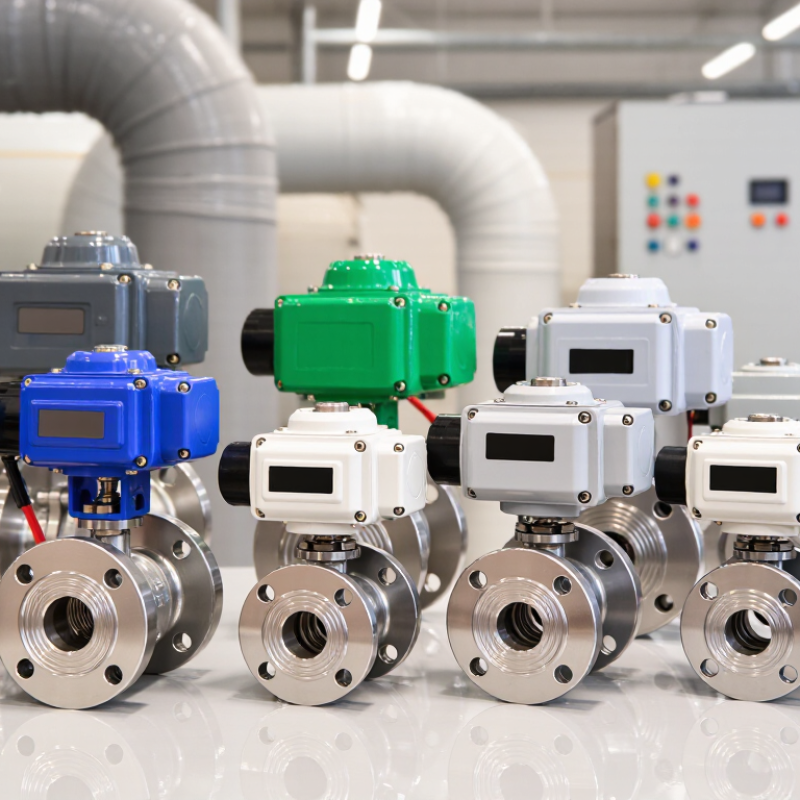
China’s electric valve industry is expanding with industrial automation, water treatment, HVAC, energy, and smart manufacturing. An Electric Ball Valve combines a quarter-turn ball valve with an electric actuator. It can provide quick isolation, remote operation, and repeatable flow control.

Industry data supports this growing demand. Grand View Research reported continued expansion in the global industrial valves market through 2030. MarketsandMarkets also forecasts steady growth for the ball valves market, driven by process automation and infrastructure investment. These reports do not measure every Chinese manufacturer equally. Their regional coverage and research methods differ. That limitation matters.

Greg McMillan, a recognized process-control engineer and author, has stated, “The valve is the final control element in the process.” His point is practical. A reliable actuator cannot compensate for poor valve sizing or weak sealing materials. Buyers should examine torque margins, leakage class, IP protection, cycle life, voltage options, and service support. Stainless steel bodies may suit corrosive environments. Brass models can fit lighter water applications. Installation details remain important.

This China Top 10 Electric Ball Valve Manufacturers overview will compare manufacturers through product capability, certifications, export experience, customization, and after-sales support. A ranking is useful, but never perfect. Company size does not always equal engineering quality. A smaller factory may provide better technical communication or faster customization. Readers should verify test reports, production capacity, and current certifications before making a purchasing decision.
China Top 10 Electric Ball Valve Manufacturers?

What Are Electric Ball Valves and How Do They Work?

Electric ball valves use a rotating ball to control liquid or gas flow. A drilled passage runs through the ball. When the passage aligns with the pipe, the valve opens. A quarter turn blocks the passage and stops flow.

An electric actuator supplies this rotation. It receives a control signal from a switch, controller, or automation system. Internal gears transfer motor torque to the valve stem. Many actuators include limit switches, position indicators, and manual overrides. These features help technicians confirm the valve’s condition during inspection. The movement is slower than a pneumatic valve, but it offers accurate positioning and simple wiring.

In field installations, sizing matters more than appearance. The valve must match the medium, pressure, temperature, and pipe connection. Water service may require different sealing materials than mildly corrosive chemicals. A tight shutoff rating is also important for tanks and process lines. Electric ball valves are not ideal for every throttling task. Continuous partial opening can damage seats or create unstable flow. That assumption is easy to miss.

Technicians should check actuator torque against valve resistance, especially after long storage. Condensation can affect electrical connections. A failed limit switch may leave the valve apparently powered but mechanically misaligned. Testing the full open and closed positions helps reveal this problem. In practice, maintenance records often expose installation errors before the actuator fails. Electrics need protection.

How Should China’s Top Electric Ball Valve Manufacturers Be Evaluated?

China Top 10 Electric Ball Valve Manufacturers?

How Should China’s Top Electric Ball Valve Manufacturers Be Evaluated?

A serious evaluation should begin with application fit, not catalog size. Check valve materials, pressure ratings, temperature limits, and media compatibility. Stainless steel may suit corrosive fluids, while reinforced polymers can reduce cost in milder systems. Ask for torque calculations based on real operating conditions. Oversized actuators waste energy and increase purchase costs. Undersized units may stall.

Factory capability matters just as much. Review machining accuracy, assembly procedures, and electrical testing records. A reliable manufacturer should provide traceable material certificates and clear inspection reports. Examine how each valve is tested for leakage, switching time, and actuator endurance. Sample testing is useful, but production consistency matters more. Ask to witness a factory acceptance test when possible.

Service quality often reveals practical experience. Confirm spare-part availability, wiring support, installation guidance, and response times. Technical documents should show wiring diagrams, protection ratings, and maintenance intervals. Do not judge quality from polished photographs alone. Visit the facility or request recent production evidence. Some evaluations miss small details, such as poor cable sealing or unclear terminal labels. These weaknesses can cause field delays. A useful assessment also records failures honestly. No manufacturer has a perfect history. The important question is how quickly problems are identified, explained, and corrected.

China Top 10 Electric Ball Valve Manufacturers: Evaluation Framework

Recommended procurement weighting for comparing electric ball valve manufacturers without using company or brand data.

The evaluation model prioritizes measurable purchasing factors: valve durability, sealing performance, actuator reliability, compliance with international standards, material quality, technical support, and customization capability. Buyers can use these weights to create a consistent shortlist and verify each supplier through technical documents, test reports, certifications, and sample testing.

Who Are the Top 10 Electric Ball Valve Manufacturers in China?

Who Are the Top 10 Electric Ball Valve Manufacturers in China?

Identifying China’s top ten electric ball valve manufacturers requires more than checking export volume. A reliable review should examine actuator torque, leakage performance, operating cycles, enclosure protection, and factory testing records. This matters because electric valves often control water, air, chemicals, and heating systems under continuous service. MarketsandMarkets estimates that the global industrial valves market may grow from about USD 78 billion in 2023 to more than USD 100 billion by 2028. Asia remains a major manufacturing and consumption region.

The strongest Chinese manufacturers usually provide stainless steel or brass valve bodies, compact electric actuators, manual override functions, and IP65 or higher protection. They should also support voltage options such as 12V, 24V, and 220V. Factory evidence is important. Look for pressure tests, torque verification, cycle testing, and traceable inspection reports. Grand View Research has identified Asia-Pacific as one of the fastest-growing regions for actuator demand, driven by water treatment, HVAC, process automation, and energy projects. Still, rankings can be imperfect. Some factories excel in customized orders, while others perform better in standardized production. A practical top-ten list should therefore compare audited capacity, response time, certifications, warranty terms, and documented field experience rather than relying on promotional claims.

China Top 10 Electric Ball Valve Manufacturers? - Who Are the Top 10 Electric Ball Valve Manufacturers in China?
Rank Anonymous Manufacturer Profile Typical Valve Sizes Common Pressure Range Typical Valve Materials Actuator Type Ingress Protection Control Options Operating Temperature Typical Certifications Typical Lead Time
1 Anonymous Manufacturer Profile 01 DN15–DN200
1/2–8 in
PN10–PN40
Class 150–300
Brass, stainless steel, carbon steel Quarter-turn electric actuator IP65–IP68 On/off, floating-point, modulating -10°C to 180°C CE; ISO 9001 commonly available 15–30 working days
2 Anonymous Manufacturer Profile 02 DN15–DN150
1/2–6 in
PN16–PN40
Class 150
316 stainless steel; reinforced PTFE seats Compact electric actuator IP65–IP67 On/off, 4–20 mA, 0–10 V -20°C to 180°C CE; RoHS for selected configurations 10–25 working days
3 Anonymous Manufacturer Profile 03 DN25–DN300
1–12 in
PN10–PN25
Class 150
Ductile iron, carbon steel, stainless steel Heavy-duty quarter-turn actuator IP67 On/off, modulating, manual override -20°C to 150°C CE; ISO 9001 commonly available 20–35 working days
4 Anonymous Manufacturer Profile 04 DN15–DN100
1/2–4 in
PN16–PN40
Class 150–300
Brass and stainless steel Mini electric actuator IP65 On/off, three-wire control, proportional control -10°C to 120°C CE; RoHS for selected models 7–20 working days
5 Anonymous Manufacturer Profile 05 DN20–DN250
3/4–10 in
PN10–PN40
Class 150
Stainless steel, carbon steel, alloy steel Explosion-protected electric actuator options IP66–IP68 On/off, modulating, remote feedback -20°C to 200°C CE; ATEX availability depends on configuration 25–45 working days
6 Anonymous Manufacturer Profile 06 DN15–DN200
1/2–8 in
PN16–PN25
Class 150
Brass, stainless steel, PVC options Low-power electric actuator IP65–IP67 On/off, battery-compatible control, feedback signal 0°C to 120°C CE; RoHS for selected models 10–25 working days
7 Anonymous Manufacturer Profile 07 DN25–DN400
1–16 in
PN10–PN25
Class 150
Ductile iron, carbon steel, stainless steel Industrial electric actuator IP67–IP68 On/off, modulating, fieldbus-ready options -20°C to 180°C CE; ISO 9001 commonly available 25–50 working days
8 Anonymous Manufacturer Profile 08 DN15–DN150
1/2–6 in
PN16–PN40
Class 150–300
316 stainless steel; PTFE and PEEK seat options Corrosion-resistant electric actuator IP65–IP68 On/off, 4–20 mA, position feedback -30°C to 180°C CE; RoHS for selected configurations 15–35 working days
9 Anonymous Manufacturer Profile 09 DN20–DN300
3/4–12 in
PN10–PN40
Class 150
Carbon steel, stainless steel, lined options High-torque electric actuator IP66–IP68 On/off, modulating, emergency manual operation -20°C to 200°C CE; ISO 9001 commonly available 20–40 working days
10 Anonymous Manufacturer Profile 10 DN15–DN100
1/2–4 in
PN16–PN40
Class 150–300
Brass, stainless steel, forged steel Compact and smart electric actuator IP65–IP67 On/off, 4–20 mA, Bluetooth or network options -10°C to 150°C CE; RoHS for selected models 10–30 working days
The profiles above use anonymous labels rather than company or brand names. Specifications represent commonly published ranges for electric ball valves manufactured in China; actual pressure ratings, materials, certifications, delivery times, and operating temperatures should be confirmed against the specific product datasheet and application requirements.

What Products, Industries, and Applications Do They Serve?

China’s top 10 electric ball valve manufacturers typically serve water treatment, HVAC, irrigation, food processing, chemical handling, and general industrial automation.

Their product ranges often include two-way and three-way valves, brass or stainless-steel bodies, threaded or flanged connections, and compact electric actuators. Some suppliers also offer proportional control, manual override, position feedback, and fail-safe options.

In field projects, valve selection depends on more than pipe size. Engineers check media compatibility, pressure, temperature, cycle frequency, ingress protection, and actuator torque.

A stainless-steel valve may suit mildly corrosive process water, while reinforced materials can support demanding chemical systems.

In factories, these valves control cooling water, compressed air, steam-related auxiliary lines, and cleaning systems. They are also used in greenhouse irrigation and building management systems.

However, “top 10” rankings can change by export volume, testing quality, and after-sales performance. That part deserves caution.

Tips:

Request product drawings, test reports, wiring details, and sample units before bulk purchasing. Confirm the valve’s actual working pressure, not only its maximum label. Ask how spare actuators are supplied. Small details matter.

I have seen projects fail because the actuator lacked enough torque after years of frequent cycling. Choose suppliers that provide traceable materials, clear inspection records, and responsive technical support. An attractive price is useful, but it should never replace application testing.

How Can Buyers Select the Right Chinese Manufacturer?

Choosing among China’s top 10 electric ball valve manufacturers requires more than comparing prices or online rankings. Buyers should match each factory with the application. Confirm the valve size, pressure rating, temperature range, fluid type, body material, seal material, and actuator torque. A supplier experienced with clean water may not understand corrosive chemicals or high-cycle industrial service.

Request technical drawings, material certificates, leakage test reports, and actuator calibration records. During a factory audit, inspect machining accuracy, assembly controls, traceability, and hydrostatic testing. Ask how the manufacturer handles failed samples and urgent replacements. Certifications help, but they do not automatically prove consistent quality. Verify the issuing body and check whether documents match the actual production site.

Test samples under realistic conditions. Check response time, closing position, manual override, wiring, and enclosure protection. A pilot order can reveal packaging weaknesses, unstable lead times, or poor communication. Do not judge the factory only by its showroom. Visit the testing area. Speak with the engineers, not only the sales team. One low quotation may hide weaker seals, limited testing, or expensive spare parts. I have learned that small details often matter more than polished presentations. Buyers should also review warranty terms, service response times, production capacity, and change-control procedures. Some assumptions will be wrong. Recheck them before signing.

FAQS

What is an electric ball valve?

It uses a drilled ball to control liquid or gas flow. A quarter turn opens or blocks the passage.

How does the electric actuator operate the valve?

The actuator receives a signal from a switch, controller, or automation system. Its motor and gears turn the valve stem.

What features help technicians inspect these valves?

Common features include limit switches, position indicators, and manual overrides. These show whether the valve is open, closed, or misaligned.

Are electric ball valves suitable for continuous flow adjustment?

They are not ideal for every throttling application. Long periods of partial opening may damage seats or create unstable flow.

What should engineers check before selecting a valve?

Check the medium, pressure, temperature, pipe connection, cycle frequency, and actuator torque. Appearance matters less.

Which industries commonly use electric ball valves?

Common applications include water treatment, HVAC, irrigation, food processing, chemical handling, and industrial automation.

What materials and connection types are available?

Options may include brass or stainless-steel bodies, threaded or flanged connections, and two-way or three-way designs.

How can buyers reduce installation problems?

Request drawings, test reports, wiring details, and sample units before bulk purchasing. Confirm working pressure, not only maximum pressure.

What maintenance problems can occur after installation?

Condensation may affect electrical connections. A failed limit switch can leave the actuator powered but mechanically misaligned.

How can teams verify correct valve operation?

Test the complete open and closed positions. Review maintenance records, because they may reveal installation mistakes first.

Why is actuator torque important?

The actuator must overcome valve resistance, especially after long storage or frequent cycling. A low price cannot fix insufficient torque.

Are supplier rankings always reliable?

No. Rankings can change with export volume, testing quality, and technical support. Treat rankings carefully.

Conclusion

This article provides a practical guide to China’s leading electric ball valve manufacturers, explaining how an Electric Ball Valve operates and why it is widely used for reliable fluid control. It outlines key evaluation criteria, including product quality, actuator performance, material selection, flow capacity, sealing reliability, production standards, customization capabilities, testing procedures, and after-sales support. The discussion also introduces ten representative types of Chinese manufacturers without focusing on brand names, helping readers understand the strengths and specialties commonly found in the market.

In addition, the article reviews the products, industries, and applications these manufacturers typically serve, including water treatment, HVAC, industrial automation, energy systems, chemical processing, and general pipeline control. Buyers will also find practical advice for comparing suppliers, confirming technical requirements, checking certifications, assessing delivery and service capabilities, and selecting a manufacturer that offers the right balance of performance, durability, compatibility, and cost for their specific project.

Mason

Mason

Mason is a seasoned marketing professional with a deep expertise in the company's offerings and a passion for driving brand awareness. With a strong background in digital marketing strategies, he has an innate ability to connect with diverse audiences and effectively communicate product benefits.......