Top Double Ball Valve Manufacturers for Global Buyers?

Time:2026-10-01 Author:Charlotte
0%

Choosing a reliable Double Ball Valve manufacturer requires more than comparing prices or browsing attractive product photos. Global buyers must examine pressure ratings, body materials, sealing performance, machining accuracy, and documented testing procedures. A valve may look robust on a website, yet fail when exposed to abrasive media, temperature changes, or repeated cycling.

John Ballun, author of The Valve Primer, has emphasized, “A valve is only as good as its application.” This practical view matters when evaluating manufacturers for oil and gas, chemical processing, water treatment, and industrial pipeline projects. The strongest suppliers usually provide traceable materials, dimensional inspection reports, hydrostatic testing, and clear production records. They also understand regional certification expectations and export documentation.

Small details matter. Ask how the manufacturer protects stainless-steel surfaces during shipping. Check whether actuator mounting dimensions remain consistent across production batches. Confirm spare-part availability before signing a long-term supply agreement. These steps can prevent costly delays at a remote project site.

No ranking is perfect. A factory with advanced equipment may still offer weak technical support. Another supplier may have excellent engineering but inconsistent delivery performance. Therefore, this guide considers manufacturing capability, product reliability, customization experience, quality control, communication, and after-sales service. It is not a simple popularity list. It is a practical starting point for buyers who need a Double Ball Valve that performs reliably after installation, not merely one that appears competitive in a quotation.
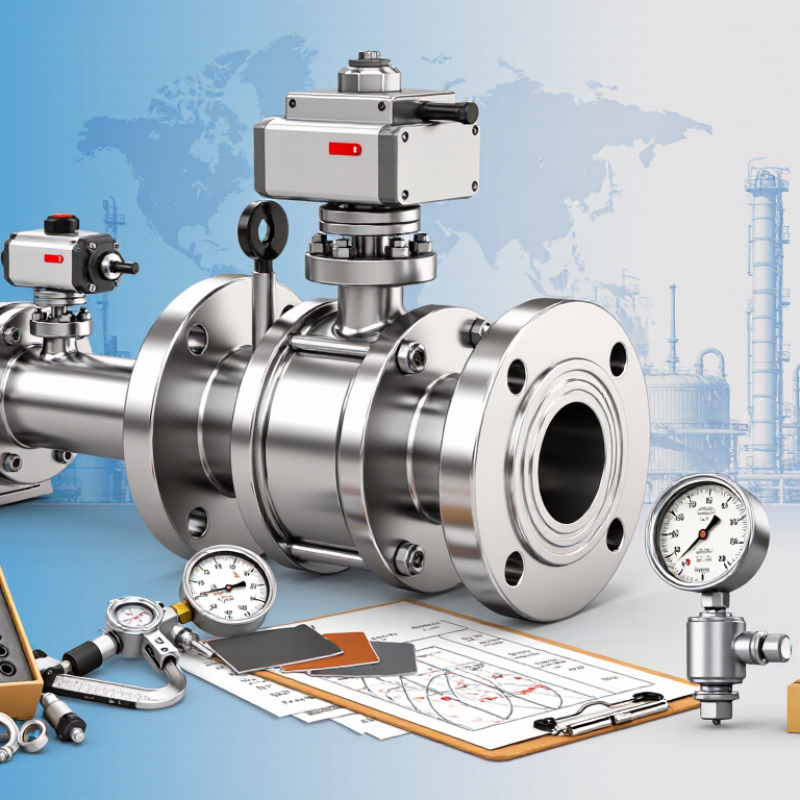
Top Double Ball Valve Manufacturers for Global Buyers?

What Is a Double Ball Valve and Where Is It Used?

A double ball valve contains two ball-and-seat shutoff mechanisms in one valve body. When both seats close, the line can be isolated from upstream and downstream pressure. Many designs also provide a small cavity bleed or vent point. This arrangement is commonly called double block and bleed, although terminology is not perfectly consistent. Buyers should check the actual flow diagram, not only the product title.

Double ball valves serve pipelines, gas processing units, petrochemical plants, LNG terminals, and high-pressure water systems. Operators use them near pumps, storage tanks, meters, and maintenance boundaries. A technician may close both handles, confirm zero trapped pressure through the bleed port, and then remove downstream equipment. That physical verification matters. A closed handle alone proves little.

Grand View Research estimated the global industrial valves market at about USD 78 billion in 2023, with continued growth expected through 2030. This wider market includes many valve types, so it does not measure double ball valves separately. Still, it shows why selection quality matters for global buyers. API 6D and ASME B16.34 provide useful references for pipeline design, pressure integrity, materials, and testing. Experience also exposes a weakness: compact valves can save space but may complicate cavity inspection. Buyers should compare pressure class, seat material, fire-safe testing, fugitive-emission performance, temperature range, and certification records. A cheaper valve may create expensive maintenance later.

How to Evaluate Double Ball Valve Manufacturers Worldwide

How to Evaluate Double Ball Valve Manufacturers Worldwide

Global buyers should evaluate double ball valve manufacturers through evidence, not polished catalogs. Grand View Research estimated the global industrial valves market at USD 78.7 billion in 2022, with steady growth expected through 2030. This expansion increases supplier choices, but also increases quality differences. Request material certificates, pressure-test records, heat numbers, and dimensional drawings for every critical order. A reliable manufacturer should explain how each valve meets API 6D, ISO 5208, or applicable project specifications.

Look closely at production details. Ask whether the supplier performs body, seat, and cavity-pressure testing on finished valves. Check the test medium, pressure duration, acceptance criteria, and calibration dates. For a large valve, inspect machining marks around the seats and flange faces. These details reveal more than a factory tour. The International Organization for Standardization identifies ISO 5208 as a benchmark for pressure testing and leakage acceptance. Still, certification alone is not enough. A certificate may be valid while daily process control remains weak.

Evaluate traceability, delivery capability, and field support together. Request references for similar pressure classes, sizes, temperatures, and media. Compare realistic lead times, spare-part availability, warranty terms, and inspection access. I would also review nonconformance records, if available. That can feel uncomfortable. Yet honest records often show whether corrective actions actually work. A manufacturer with strong engineering knowledge should explain failure risks clearly, including seal wear, cavity pressure, and incorrect installation. One impressive sample is not proof of consistent production.

How to Evaluate Double Ball Valve Manufacturers Worldwide

This illustrative buyer scorecard shows suggested evaluation weights for comparing double ball valve manufacturers. Buyers should verify applicable standards, pressure ratings, material certificates, testing records, production capacity, delivery performance, and after-sales support for each project.

Key Manufacturing Standards, Materials, and Quality Controls

Top Double Ball Valve Manufacturers for Global Buyers?

For global buyers, manufacturing standards should be checked before price comparisons. Reliable double ball valve production commonly follows API 6D, ASME B16.34, and ISO 5211 requirements. These standards address pressure design, dimensions, actuation, and functional safety. However, certification alone is not enough. Experienced buyers should review the actual quality plan, drawing approval records, and material certificates. A clear document trail matters.

Material selection depends on pressure, temperature, and media conditions. Forged carbon steel suits many general pipeline services, while 316 stainless steel offers better corrosion resistance. Duplex steel may perform better in chloride-rich environments. Seat materials such as PTFE, reinforced polymers, or PEEK need careful temperature and chemical compatibility checks. Metal seats can support demanding service, but they may require tighter machining control. Small details matter.

Quality control should include positive material identification, dimensional inspection, ultrasonic testing, and hydrostatic shell testing. Seat leakage tests must follow the agreed standard and pressure class. Inspectors should also verify stem torque, cavity relief, coating thickness, and actuator alignment. Traceability should connect each valve to heat numbers and test results. In factory audits, I have seen complete-looking files with missing calibration records. That is a warning. Inspection plans can also be too generic. Buyers should request test procedures, acceptance criteria, and independent inspection points before production begins.

Leading Double Ball Valve Manufacturers by Market Strength

Leading Double Ball Valve Manufacturers by Market Strength

Market strength in double ball valves is not measured by factory size alone. It depends on pressure capability, delivery consistency, testing depth, and service coverage. Grand View Research estimated the global industrial valves market at about USD 77 billion in 2023. Its report expects continued growth through 2030, supported by energy, water, and process industries. This wider market signals demand, but it does not prove double ball valve leadership.

Serious manufacturers should show documented production controls and field experience. Look for ISO 9001 systems, API 6D compliance, and pressure testing aligned with ISO 5208. A capable plant should provide clear material certificates, traceable heat numbers, and test records for every valve. Small details matter. For example, buyers should examine how a supplier handles seat leakage, cavity pressure, and emergency shutdown requirements. These records reveal more than polished brochures.

Regional strength also matters. Manufacturers with machining, assembly, and service capacity near major pipeline markets usually reduce delivery risk. The International Energy Agency reported continued investment in gas infrastructure and low-carbon projects, creating varied valve requirements. However, market forecasts can overstate real purchasing momentum. That weakness deserves attention. A supplier may report strong revenue while depending on one industry or a few large projects. Global buyers should compare five-year delivery data, warranty claims, spare-part availability, and independent inspection results before judging market strength.

How Global Buyers Can Compare Suppliers and Place Orders

Top Double Ball Valve Manufacturers for Global Buyers?

Global buyers should compare double ball valve suppliers by evidence, not catalog language. The Grand View Research Industrial Valves Market report estimates a global market value of USD 78.7 billion in 2023. That scale attracts capable factories and weak intermediaries. Ask for material certificates, pressure-test records, traceability, and production photos with dates. Check whether the valve design matches API 6D, ISO 5208, or another required standard. Do not assume every “double block and bleed” valve has identical sealing performance.

A practical RFQ should state size, pressure class, body material, seat material, bore type, actuator needs, inspection level, and delivery terms. Request a sample inspection plan before placing the order. Witnessed hydrostatic and gas tests can expose problems early. The World Bank’s 2023 Logistics Performance Index covers 139 economies, showing why shipping reliability deserves attention. Confirm lead time, export packaging, port options, insurance, and document accuracy. A low price can become expensive after delays, rework, or missing certificates.

Tips: Compare at least three technically equivalent quotations. Use one specification sheet for every supplier. Check references from similar industries. Review the final drawing carefully. I would not trust a polished catalog alone. That sounds obvious, yet buyers still miss it. Include inspection rights, replacement terms, and late-delivery remedies in the purchase contract. Leave room for doubt, especially when a supplier promises unusually fast production.

Top Double Ball Valve Manufacturers for Global Buyers? - How Global Buyers Can Compare Suppliers and Place Orders
Comparison Dimension Supplier Profile 01 Supplier Profile 02 Supplier Profile 03 Supplier Profile 04 Supplier Profile 05
Typical Product Positioning Standard industrial double block and bleed ball valves for general process service High-pressure pipeline and transmission applications Compact valves for chemical, petrochemical, and utility systems Custom-engineered valves for severe-service projects Export-oriented valves for distributors and maintenance orders
Common Nominal Size Range DN15–DN600
(NPS ½–24)
DN50–DN1200
(NPS 2–48)
DN15–DN300
(NPS ½–12)
DN25–DN900
(NPS 1–36)
DN15–DN600
(NPS ½–24)
Pressure Classes Commonly Offered ASME Class 150–600 ASME Class 300–2500 ASME Class 150–600 ASME Class 300–1500 ASME Class 150–900
Typical Valve Configuration Two-piece or three-piece, flanged or threaded ends Top-entry or side-entry, full-bore, flanged ends Side-entry, reduced-bore and full-bore options Top-entry, metal-seated, trunnion-mounted options Floating-ball and trunnion-mounted configurations
Body and Trim Materials Carbon steel, stainless steel, alloy steel; stainless trim options Carbon steel and low-temperature carbon steel; stainless or alloy trim Stainless steel, carbon steel, duplex options for selected designs Carbon steel, stainless steel, duplex, nickel alloys, and overlay solutions Carbon steel and stainless steel with standard corrosion-resistant trim
Seat Options PTFE, reinforced PTFE, RPTFE, and PEEK RPTFE, PEEK, and metal-seated designs PTFE, RPTFE, PEEK, and fire-safe soft seats Metal-to-metal, PEEK, RPTFE, and special high-temperature seats PTFE, RPTFE, and fire-safe soft-seat configurations
Relevant Design Standards API 6D ASME B16.34 ISO 5211 API 6D ASME B16.34 ASME B16.5 API 6D ISO 17292 ISO 5211 API 6D API 608 ASME B16.34 API 6D API 608 ISO 5211
Testing and Inspection Options Shell and seat testing; NDE available by order Hydrostatic, pneumatic, fugitive-emission, and NDE packages Shell and closure testing; material certificates available Hydrostatic, cryogenic, fire-safe, fugitive-emission, and NDE testing Hydrostatic and pneumatic testing; inspection plans available
Low-Temperature Capability Available with low-temperature carbon steel and impact testing Strong fit for low-temperature pipeline service with project specifications Available for selected stainless and low-temperature steel models Available with impact-tested materials and engineered trim packages Available as a project-specific option
Hydrogen Sulfide Service Can be configured to NACE MR0175 / ISO 15156 requirements Commonly specified for sour-service pipeline applications Available when material and hardness requirements are defined Available with documented material selection and hardness controls Available by technical agreement and purchase specification
Actuation and Accessories Manual gearboxes, pneumatic actuators, electric actuators, limit switches Pneumatic, hydraulic, and electric actuation with emergency shutdown options Manual, pneumatic, and electric packages for plant automation Actuator sizing, control panels, positioners, and partial-stroke systems Manual and pneumatic packages with common accessory options
Documentation Usually Available Mill certificates, pressure-test reports, dimensional drawings, packing list Quality plan, material certificates, NDE reports, test records, and data book Drawings, certificates of conformity, test reports, and spare-parts lists Inspection and test plan, traceability records, welding documents, and complete data book Material certificates, test reports, drawings, certificates of origin, and manuals
Indicative Production Lead Time 4–8 weeks after drawing approval 8–16 weeks after technical clarification and order confirmation 5–10 weeks after specification approval 10–20 weeks for engineered or special-material orders 3–8 weeks for standard configurations
Customization Capability Medium: dimensions, materials, actuation, and end connections High: bore, pressure class, pigging, actuation, and pipeline accessories Medium: materials, seats, coatings, and actuator packages Very high: special alloys, cryogenic service, metal seats, and project testing Medium: standard engineering changes and private-label packaging
Best Fit for Global Buyers Routine process equipment and replacement projects Large pipeline, terminal, and energy infrastructure projects General plant applications requiring compact and flexible configurations Projects with demanding specifications, severe service, or extensive inspection Stock replenishment, distributor sales, and standard export orders
Buyer Verification Checklist Confirm pressure-temperature rating, face-to-face dimensions, and test scope Confirm API licensing or compliance evidence, traceability, and project references Confirm seat compatibility, emissions requirements, and actuator interface Confirm engineering calculations, material availability, inspection hold points, and warranty terms Confirm product consistency, export packaging, spare parts, and after-sales response
Overall Suitability Rating ★★★★☆
Strong for standard industrial orders
★★★★★
Strong for high-pressure pipeline projects
★★★★☆
Strong for general plant applications
★★★★★
Strong for engineered severe-service orders
★★★★☆
Strong for standard export purchasing

Note: The specifications above represent typical market configurations and purchasing benchmarks. Final valve selection should be confirmed against the approved datasheet, pressure-temperature ratings, applicable standards, material requirements, inspection plan, and delivery schedule for each project.

FAQS

What is a double ball valve?

It contains two ball-and-seat shutoff mechanisms inside one valve body. Both seats can isolate the line. Two barriers matter.

What does double block and bleed mean?

Both internal seats close, while a small bleed or vent releases trapped cavity pressure. Terminology can vary. Check the flow diagram.

Where are double ball valves commonly used?

They serve pipelines, gas processing units, petrochemical facilities, LNG terminals, and high-pressure water systems. Common locations include pumps, tanks, meters, and maintenance boundaries.

How should operators verify safe isolation?

Close both handles, then confirm zero trapped pressure through the bleed port. A closed handle proves little. Physical verification remains essential.

Which specifications should buyers compare?

Compare pressure class, seat material, temperature range, fire-safe testing, emissions performance, and certification records. Material certificates should include traceable heat numbers.

Why can compact valve designs create problems?

Compact designs save installation space but may make cavity inspection difficult. A smaller footprint is not always easier to maintain.

How can buyers judge a manufacturer’s reliability?

Review production controls, pressure-test records, delivery history, warranty claims, spare-part access, and independent inspection results. Brochures are not enough.

Does market size prove double ball valve leadership?

No. Broad industrial valve forecasts include many valve types. Market growth shows demand, not individual product leadership.

Can a cheaper valve reduce total costs?

Sometimes, but not reliably. Weak testing or limited spare parts may create expensive maintenance later. I would check the evidence carefully.

Conclusion

A Double Ball Valve is a flow-control device designed with two ball mechanisms, offering reliable shutoff, improved isolation, and easier maintenance in demanding piping systems. It is commonly used in oil and gas, chemical processing, water treatment, power generation, and industrial manufacturing, especially where safety, pressure control, and dependable operation are essential. Understanding its structure, working conditions, and application requirements helps buyers select the right configuration.

When evaluating manufacturers worldwide, global buyers should compare production capacity, engineering experience, certifications, material options, pressure ratings, testing procedures, and quality-control systems. Important considerations include corrosion-resistant alloys, sealing performance, dimensional accuracy, traceability, and compliance with recognized manufacturing standards. Buyers should also review lead times, customization capabilities, inspection documents, warranty terms, communication efficiency, and after-sales support. A clear comparison of technical specifications, total cost, logistics, and order conditions can help purchasers identify dependable suppliers and place orders with greater confidence.

Charlotte

Charlotte

Charlotte is a seasoned marketing professional with a deep understanding of the company's portfolio and a passion for elevating its presence in the market. With a keen eye for detail and a commitment to excellence, she ensures that our professional blog is regularly updated with insightful articles......