Precision-engineered industrial valves designed for extreme pressure ratings, cryogenic isolation, and hazardous fluid containment.
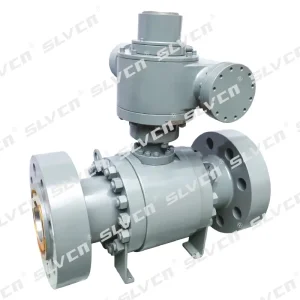
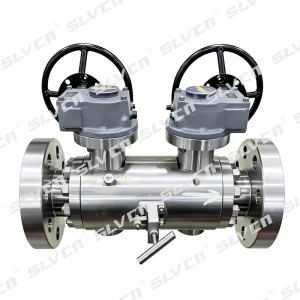
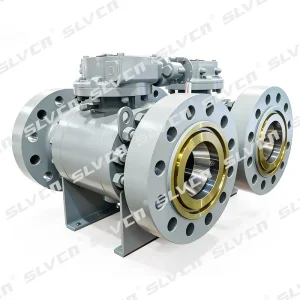
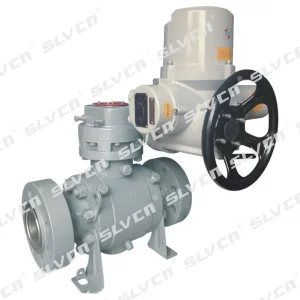
Addressing modern EPC challenges, lifecycle total cost of ownership (TCO), and stringent environmental regulations in critical fluid management.
Global environmental mandates (such as EPA Method 21, EU ETS, and ISO 15848-1 Class AH) require process industries to drastically minimize volatile organic compound (VOC) leakage. Our flow control valves utilize live-loaded PTFE/Graphite stem packing matrices to guarantee stem leakage under 50 ppm, mitigating environmental liability and product loss.
High-pressure thermal cycles present severe risks of valve seat deformation and body seal blowout. By utilizing forged steel bodies (A105N, F316L, F11, Duplex) combined with HVOF hard-faced metal seats (Stellite / Tungsten Carbide), our flow control systems operate continuously at temperatures up to 550°C and pressures up to ANSI Class 2500.
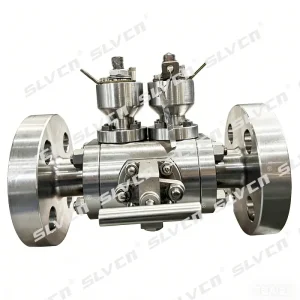
Traditional isolation requires multi-valve manifolds, introducing multiple leak paths and excessive weight. Integrated Twin-Ball DBB valves combine primary isolation, secondary isolation, and cavity venting into a single compact forged body—reducing structural footprint by up to 60% while guaranteeing positive shut-off verification.
Engineered to meet specific operating challenges across critical global energy and industrial infrastructure.
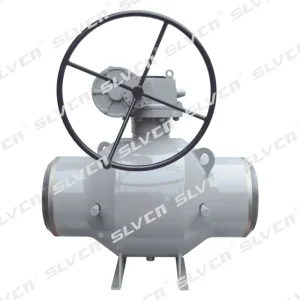
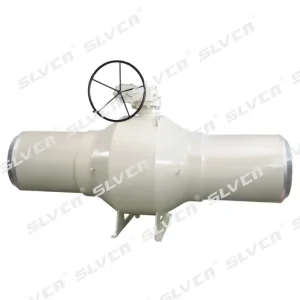
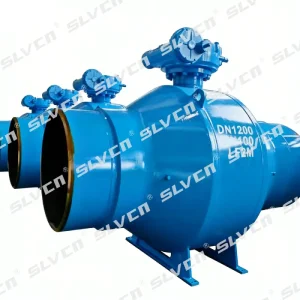
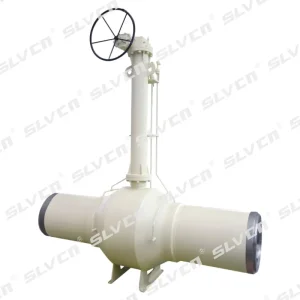
From high-pressure upstream wellheads to midstream cross-country gas pipelines, our API 6D fully welded trunnion-mounted ball valves provide maximum bending moment resistance, maintenance-free buried service capability, and emergency sealant injection features for absolute isolation confidence.
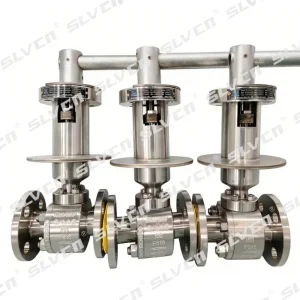
Handling Liquefied Natural Gas (LNG) at temperatures as low as -196°C requires extended bonnets to keep packing glands away from cryogenic media. Our cryogenic floating and trunnion valves incorporate PCTFE/Kel-F seats, pressure-equalizing cavity relief, and cryogenic nitrogen shell-and-seat testing per BS 6364.
Processes involving hydrocracking, catalytic reforming, and ethylene production require valves resistant to severe thermal shock, catalyst fines, and sour gas (H2S) corrosion. We manufacture NACE MR0175/ISO 15156 compliant flow control valves featuring heavy-duty electric and pneumatic actuators for fast emergency shutdown (ESD) duty.
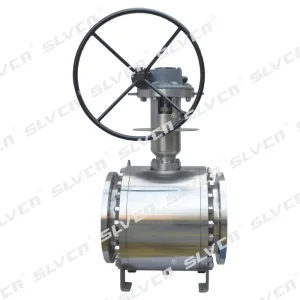
Supercritical and ultra-supercritical thermal power plants demand severe-service control valves capable of handling high differential pressures without cavitation or excessive noise. Top-entry WCB/F11 trunnion-mounted valves enable inline maintenance without removing the valve body from the steam line.
As the green hydrogen economy scales globally, containment of tiny molecular hydrogen at ultra-high pressures is paramount. Our zero-permeation stem seals, specialized surface finishes (Ra < 0.2 µm), and austenitic stainless steel alloys prevent hydrogen embrittlement and guarantee zero external leakage.
Desalination plants and industrial effluent treatment facilities require cost-effective flow control solutions that withstand chloride-induced pitting and crevice corrosion. Super Duplex and Nickel Aluminum Bronze ball valves deliver reliable operational longevity under continuous high-pressure sea water reverse osmosis (SWRO) conditions.
Pioneering smart digital integration, advanced surface coatings, and zero-emission fluid handling architectures.
Traditional soft seats fail rapidly in abrasive or high-temperature conditions. Our engineering team utilizes High-Velocity Oxygen Fuel (HVOF) spraying to apply Chromium Carbide (Cr3C2-NiCr) or Tungsten Carbide (WC-Co-Cr) coatings up to 0.3mm thickness. Achieving seat hardness exceeding Rockwell HRC 68–72, these metal-seated designs eliminate galling and resist abrasive slurry wear.
Modern industrial plants are shifting from reactive maintenance to predictive health monitoring. Our automated flow control valve assemblies integrate digital smart positioners equipped with HART, FOUNDATION Fieldbus, or Profibus protocols. Continuous tracking of partial stroke testing (PST), seat friction torque, stem wear, and dynamic pressure differentials enables seamless integration into plant DCS/SCADA networks.
| Technical Parameter | Standard Industrial Spec | SLVCN Severe-Service Spec |
|---|---|---|
| Pressure Ratings | Class 150 – Class 600 | Up to Class 2500 / 10,000 PSI |
| Operating Temperature | -29°C to 200°C | -196°C to +550°C |
| Fugitive Emissions | ISO 15848-1 Class C (1000 ppm) | ISO 15848-1 Class AH (< 50 ppm) |
| Seat Tightness | ANSI/FCI 70-2 Class IV | API 598 / ISO 5208 Rate A (Zero-Leak) |
| Fire Safety Compliance | Basic Structural Safety | API 607 7th Ed. / API 6FA Certified |
| Actuation Integration | Manual Lever / Gear | ISO 5211 Direct Pneumatic / Electric |
SLVCN is a global leader in high-performance flow control valve design, forging, precision machining, and non-destructive testing (NDT).
With a 10,000 square meter state-of-the-art manufacturing facility and dedicated R&D engineering teams, we specialize in custom valve solutions for the world's most demanding environments. Every raw forging undergoes Positive Material Identification (PMI), ultrasonic testing (UT), and magnetic particle inspection (MT) before entering production.
Our rigorous quality management system ensures full traceability from ingot to final hydrostatic testing, supported by ISO 9001, CE-PED, API 6D, and SIL 3 certifications.
Seamless integration with global procurement standards and responsive regional engineering assistance.
Full compliance with pipeline valve specifications for pressure ratings, face-to-face dimensions, and double block and bleed functionality.
Pressure Equipment Directive compliance certified for European market entry, including Module H quality assurance.
Strict sulfide stress cracking (SSC) and stress corrosion cracking (SCC) resistance for sour gas fluid media.
Certified under IEC 61508 for integration into Safety Instrumented Systems (SIS) and high-reliability trip loops.
Expert technical insights regarding flow control valve engineering, selection criteria, and maintenance best practices.
Single Piston Effect (SPE) seats automatically relieve trapped body cavity overpressure back into the pipeline if cavity pressure exceeds line pressure plus spring force. Double Piston Effect (DPE) seats utilize upstream and downstream line pressure to force both seats against the ball simultaneously, providing double sealing protection. If the primary upstream seal leaks, the secondary downstream seal maintains positive shut-off. DPE configurations require an external body relief valve to prevent thermal cavity overpressurization.
At ultra-low cryogenic temperatures (-196°C for LNG or liquid nitrogen), elastomeric and graphite stem seals lose flexibility and embrittle, leading to stem leakage. A cryogenic extended bonnet elevates the stem packing gland above the cryogenic fluid zone. The trapped gas column within the bonnet extension acts as a thermal insulator, allowing ambient heat to maintain stem packing temperatures above 0°C, ensuring flexible, bubble-tight stem sealing.
Fully welded valve bodies eliminate body flange connections, completely eradicating potential external leak paths caused by pipeline bending moments, soil movement, or thermal expansion. This maintenance-free design is ideal for direct underground burial without requiring expensive valve vaults or regular flange bolt torque re-checks.
For temperatures up to 550°C and Class 2500 pressure, forged alloy steel body materials (ASTM A182 F11/F22/F91) or 316 stainless steel are specified. Soft seats (PTFE/PEEK) cannot withstand these conditions; therefore, precision-lapped metal-to-metal seating is mandatory. Seats and balls are hard-faced using High-Velocity Oxygen Fuel (HVOF) applied Stellite #6 or Tungsten Carbide coatings (HRC > 70) to prevent micro-welding, galling, and particle erosion.
ISO 15848-1 measures fugitive emissions from industrial valve stem seals. Choosing ISO 15848-1 Class AH certified valves (< 50 ppm helium leakage over extended thermal cycles) drastically reduces product loss in high-value gas lines, protects operator safety in toxic media services (such as H2S or benzene), and prevents carbon credits penalty under global greenhouse gas regulations.
All shipments are supplied with complete EN 10204 3.1 chemical and mechanical material certifications, hydrostatic and pneumatic test inspection reports per API 598/API 6D, NDT certificates (UT, MT, PT), fire-safe certificates, and certificate of origin (CO). EN 10204 3.2 third-party inspection (SGS, TUV, DNV, Lloyd's Register) is available upon project request.
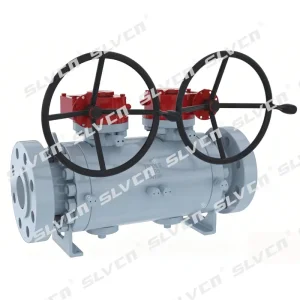
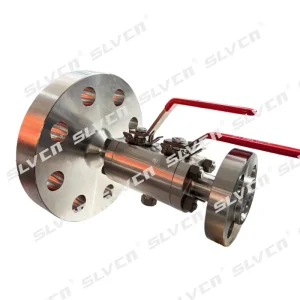
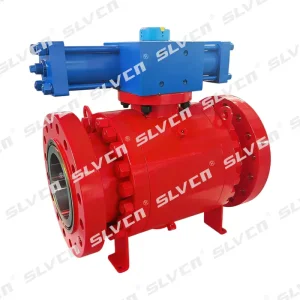
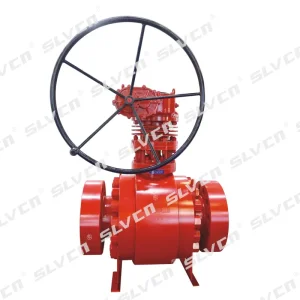
Select from our certified series of twin-ball DBB, pneumatic actuated, and large-diameter pipeline isolation valves.
 Shoulong Valve