Selected engineered solutions designed to support large-scale industrial reconstruction, gasification plants, and chemical synthesis installations in the regional infrastructure.
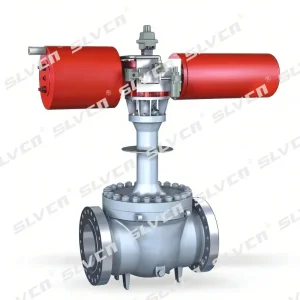
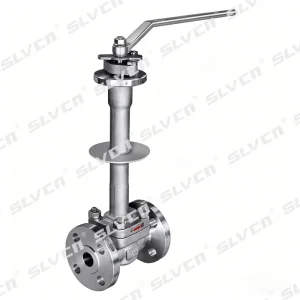
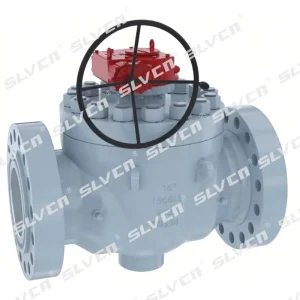
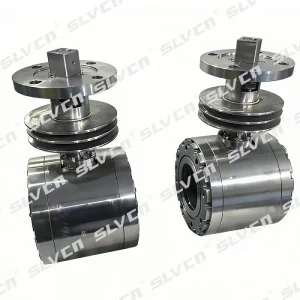
The metallurgical, synthetic chemical, and fertilizer manufacturing sectors in North Korea demand exceptionally rugged industrial valves capable of operating under high pressure, corrosive environments, and deep thermal variations. Major production centers such as the Namhung Youth Chemical Complex and the Hungnam Fertilizer Complex rely heavily on high-purity oxygen and nitrogen production via Air Separation Units (ASUs) to fuel coal gasification processes. This makes cryogenic ball valves critical for managing liquid nitrogen (-196°C) and liquid oxygen (-183°C) lines.
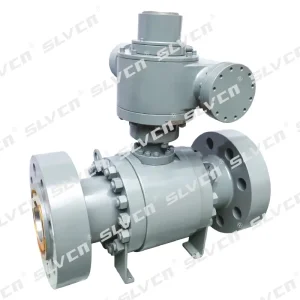
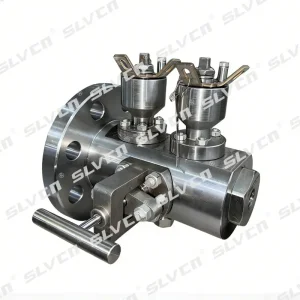
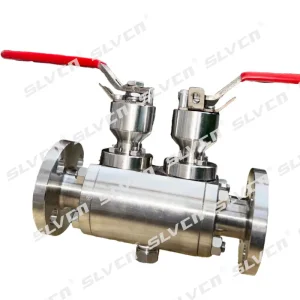
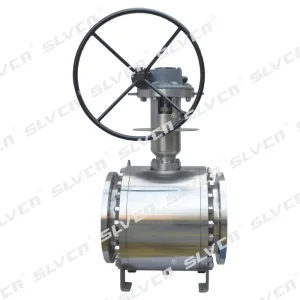
Additionally, the expansion of municipal gas pipelines and chemical processing lines in industrial hubs like Nampo and Sinuiju demands a shift from legacy gate valves to modern Double Block and Bleed (DBB) systems and Top Entry Ball Valves. These modern systems significantly reduce operational risk, eliminate cavity overpressure hazards, and offer inline maintenance capabilities without disrupting massive processing pipelines.
Our cryogenic and high-pressure valves are specially engineered for:
Deep cryogenic service down to -196°C poses extreme challenges for metallurgical structures and sealing materials. At these ultra-low temperatures, standard carbon steel undergoes a ductile-to-brittle transition. Therefore, precise selection of alloys, structural design, and validation testing are paramount.
We utilize high-grade forged and cast austenitic stainless steels such as ASTM A351 CF8M / CF3M or ASTM A182 F316 / F316L. These materials retain their face-centered cubic (FCC) lattice structure at absolute zero, maintaining high impact strength (Charpy V-Notch testing verified down to -196°C) and resisting thermal contraction stress.
Compliant with BS 6364, our valves feature an extended bonnet that positions the stem packing away from the cryogenic liquid. This design traps a layer of vaporized gas that acts as a thermal insulator, preventing the packing gland from freezing and ensuring the integrity of the stem seal.
For temperatures down to -196°C, we utilize polymer seats like Kel-F (PCTFE) or spring-energized metal-to-metal seating with tungsten carbide or chromium carbide coatings. Our designs feature built-in cavity pressure relief systems to prevent explosive vaporization of trapped cryogenic liquid within the valve body.
Every cryogenic valve destined for high-reliability projects in North Korea and globally undergoes a rigorous verification cycle in our specialized laboratories:
In high-pressure synthesis and refining units, safety isolation is a non-negotiable requirement. Traditional pipeline designs relied on two separate block valves with a spool piece and a bleed valve in between. This arrangement was bulky, expensive, and introduced multiple potential leak paths to atmosphere.
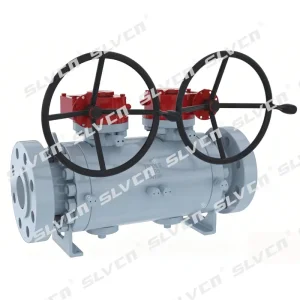
Our integrated Twin Ball Double Block and Bleed (DBB) Valves house two independent balls and a needle bleed valve within a single body. This configuration yields outstanding benefits for large chemical systems:
Sourcing critical flow control components requires both manufacturing quality and robust, dependable logistics. Our state-of-the-art China-based Smart Factory utilizes Industry 4.0 practices to deliver reliable manufacturing, quality assurance, and seamless distribution.
Our factory utilizes high-precision CNC multi-axis machines, computerized assembly centers, and automated coordinate-measuring machines (CMM) to ensure dimensional tolerances within micrometers.
Located near major northern logistics networks, we offer optimized rail freight transport through the Dandong-Sinuiju border crossing or maritime routes from Dalian/Tianjin to Nampo port.
We provide full material traceabilities (EN 10204 3.1 certification), non-destructive testing reports, and support third-party inspection agencies to verify compliance before dispatch.
Detailed answers to critical engineering questions regarding valve selection, installation, and operation in severe-service petrochemical and cryogenic applications.
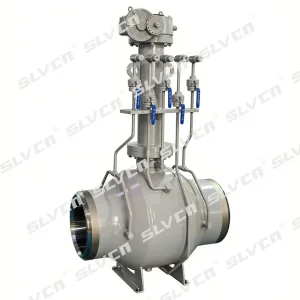
The top-entry design features a single-piece body casting or forging. Unlike side-entry designs that have joint body splits, a top-entry valve eliminates potential high-stress leak paths where body bolts can contract unevenly at cryogenic temperatures. More importantly, it permits in-line maintenance, allowing internal components (ball, seats, stem packing) to be serviced without cutting or removing the valve body from the pipeline.
The drip collar (or drip shield) is welded to the extended bonnet below the actuator mounting plate. Its primary function is to prevent condensate and ice from tracking down the bonnet outer surface and building up around the stem packing or actuator coupling. This ensures that the actuator operates smoothly without mechanical blockages caused by frost.
When liquid nitrogen, oxygen, or LNG becomes trapped inside the valve body cavity in the closed position, thermal energy from the environment causes the liquid to vaporize. A tiny volume of cryogenic liquid expanding in a closed cavity can create catastrophic pressure spikes. To prevent this, our cryogenic valves employ self-relieving seats (DPE/SPE combination or a built-in relief hole on the upstream side of the ball) to automatically vent excess pressure back into the pipeline.
Our manufacturing processes are aligned with major global standards. Design: ASME B16.34, API 6D. Pressure testing: API 598. Cryogenic specific validation: BS 6364. Fire-safe compliance: API 607 / API 6FA. Sour gas compatibility (where applicable): NACE MR0175 / ISO 15156.
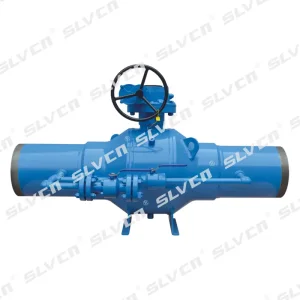
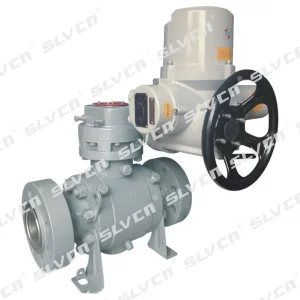
Heavy duty actuators, double block and bleed systems, and high pressure metal-seated configurations for gas pipelines and refinery upgrades.
Whether you require customized face-to-face dimensions, specific alloy castings, or cryogenic performance testing reports according to BS 6364, our engineering team is prepared to deliver.
Send Inquiry Now Shoulong Valve