Cryogenic Ball Valve Supplier & Factories for Eritrea

API 6D certified, high-performance cryogenic and severe service industrial valves engineered for ultimate reliability in extreme temperature processing across the Red Sea region.

Featured Cryogenic Solutions

Engineered for extreme performance and zero-leakage safety down to -196°C.
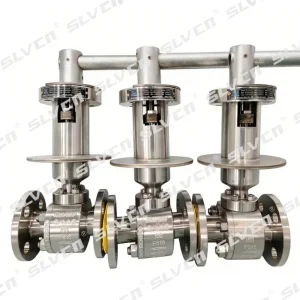
China Cryogenic Reduce Port Floating Ball Valve for Eritrea LNG Terminal

China Cryogenic Reduce Port Floating Ball Valve with Locking Device for Eritrea Pipeline Infrastructure

View Specifications
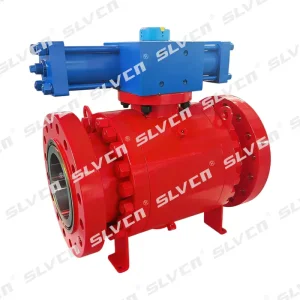
Pneumatic Actuator Trunnion Ball Valve for Eritrea Port Services

Pneumatic-Actuated Heavy-Duty Trunnion Ball Valve for Massawa Port Gas Storage Terminals

View Specifications
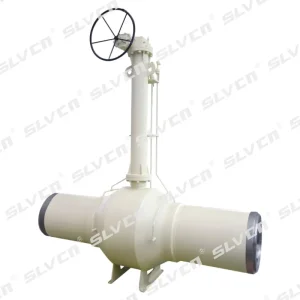
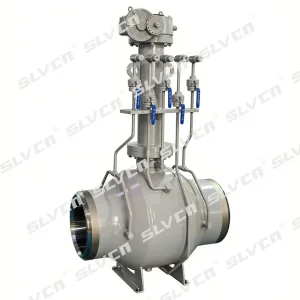
Buried Trunnion Ball Valve for Eritrea Underground Pipelines

Sub-Surface Buried Trunnion Mounted Ball Valve with Extended Stem for Eritrean Oil Network

View Specifications
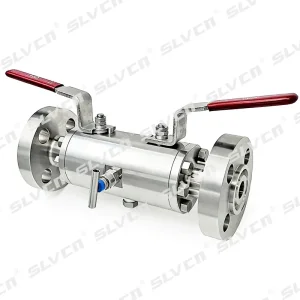
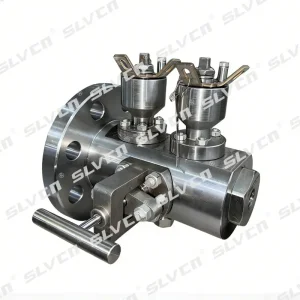
DBB Trunnion Mounted Valve for Eritrea Oil and Gas

High-Integrity DBB Trunnion Mounted Isolation Valve for Eritrea Petrochemical Processing Plants

View Specifications

1. Eritrea's Industrial Horizon & Crucial Fluid Control Needs

Eritrea, strategically situated on the Horn of Africa bordering the Red Sea, is witnessing a pivotal phase of infrastructure expansion and mineral wealth extraction. With major developments such as the Colluli Potash Project and maritime port modernization in Massawa and Assab, the demand for high-integrity piping components has escalated significantly. Cryogenic applications—particularly involving liquefied gases (LPG, LNG), nitrogen purging systems, and industrial chemical processing—demand specialized valves that can withstand dramatic thermal gradients while maintaining structural integrity.

Operating industrial projects in Eritrea presents unique environmental challenges. Coastal regions experience intense ambient temperatures, high atmospheric salinity, and abrasive windblown dust. Conversely, inside processing lines, fluids flow at sub-zero temperatures down to -196°C. Sourcing valves from a reputable manufacturer that guarantees compliance with international standards (such as API, ASME, and BS) is crucial to mitigate operational downtime and avoid catastrophic environmental hazards.

2. Cryogenic Engineering Principles: Design for -196°C

Standard industrial valves will fail immediately under cryogenic conditions due to material contraction, packing freezing, and seat deformation. To resolve these failure modes, our cryogenic ball valves integrate state-of-the-art engineering modifications:

  • Extended Bonnet (Gas Column): According to BS 6364 standards, an extended stem is vital to keep the stem packing warm enough (above 0°C) to prevent atmospheric condensation from freezing. The column of cold gas above the liquid acts as a natural insulator.
  • Drip Tray Integration: Prevents condensed moisture from trickling down and freezing the packing box and actuator mechanism.
  • Cavity Pressure Relief: Cryogenic liquids trapped in the body cavity experience rapid pressure spikes if the temperature rises. Our valves are designed with self-relieving seats or cavity vent holes to release excess pressure safely back to the upstream line.
  • Optimized Metallurgy: Utilizing low-temperature carbon steels (ASTM A352 LCB/LCC) and austenitic stainless steels (ASTM A351 CF8M/CF3M) with liquid nitrogen treatment (cryo-stabilization) to ensure dimensional stability and impact strength.

3. Global Supply Chain & Project Management Synergy

As a leading global manufacturer, we align our engineering precision with Eritrea's industrial timeline. From material certification (EN 10204 3.1) to non-destructive testing (NDT) such as Radiographic, Ultrasonic, and Dye Penetrant testing, we assure flawless QA/QC control. Our logistics team regularly coordinates complex shipping arrangements to the Port of Massawa, ensuring custom clearances, secure seaworthy packaging, and compliant documentation for project execution in East Africa.

Key Application Scenarios in Eritrea

Customized configurations engineered for the region's specific commercial and geological profile.

Mining & Potash Processing

Eritrea's extensive potash deposits (e.g., Danakil Depression) utilize cryogenic nitrogen systems for storage tank blanketing, requiring cryogenic valves designed to handle low-temperature slurry and chemical gas applications.

LNG & LPG Port Terminals

For import, export, and storage operations along the Red Sea coast (Massawa/Assab Ports), cryogenic trunnion mounted valves ensure zero gas emissions and safe isolation of highly flammable liquefied gases.

Air Separation Plants

Industrial manufacturing of high-purity liquid oxygen, nitrogen, and argon gases relies on cryogenic floating and trunnion-mounted valves to control gas liquidation and distribution networks.

Technical Comparison Matrix

Understand which cryogenic valve architecture is optimized for your project specifications.

Feature Parameter Floating Cryogenic Valve Trunnion Cryogenic Valve
Pressure Rating Class 150 to Class 600 Class 150 to Class 2500
Size Range 1/2" to 6" (Reduced Bore) 2" to 36" (Full & Reduced Bore)
Sealing Principle Upstream pressure pushes the ball against downstream seat. Spring-loaded seats push against a fixed ball.
Torque Requirement Higher (increases with pressure) Lower and stable (easier actuation)
Double Block & Bleed Not typical (requires customized design) Standard integration (excellent for isolation)
Seat Materials PTFE, Devlon, PCTFE (Kel-F) PCTFE, PEEK, Metal-to-Metal (Stellite)

Complete Severe-Service & High-Temp Product Catalog

Cross-industry valves designed to bridge the thermal gaps from cryogenic limits to high-temperature lines.
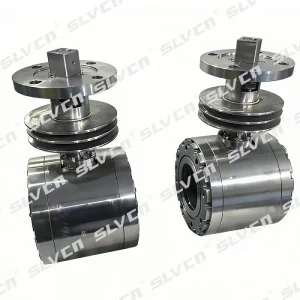
High Temperature Floating Ball Valve up to 500C for Eritrea

Thermal-Isolated Floating Ball Valve (Up to 500°C) for Eritrea Heavy Industrial Steam Lines

View Specifications
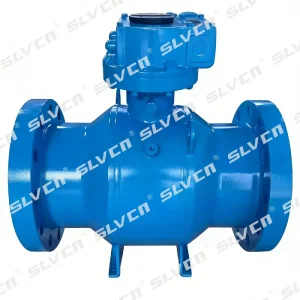
Fully Welded Flanged Trunnion Mounted Ball Valve for Eritrea

High-Pressure Fully Welded Flanged Trunnion Mounted Valve for Eritrea Pipeline Systems

View Specifications
High Temperature Floating Ball Valve Severe Environment for Eritrea

Severe-Service High-Temperature Floating Ball Valve for Potash Processing in Eritrea

View Specifications
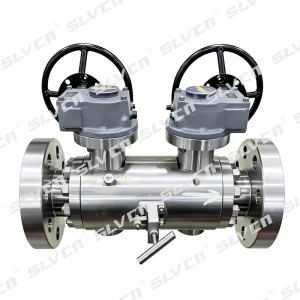
Forged Double Ball DBB Valve for Eritrea Refineries

Dual-Gear Forged DBB Double Ball Valve for Critical Isolation at Eritrean Refineries

View Specifications
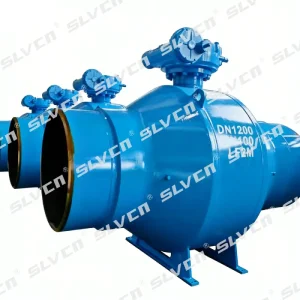
Large Diameter Fully Welded Ball Valve for Eritrea

Large-Diameter Fully Welded Pipeline Valve for Eritrea Municipal Gas Infrastructure

View Specifications
Cryogenic Floating Ball Valve with Locking Device for Eritrea

Cryogenic Reduced Port Floating Ball Valve with Integrated Security Locks for Eritrea Projects

View Specifications
Fully Welded Trunnion Mounted Ball Valve for Eritrea Pipelines

Direct-Buried Fully Welded Trunnion Ball Valve with Custom Extended Stem for Eritrea Pipeline Crossings

View Specifications
Reduced Bore DBB Double Ball Valve for Eritrea Extraction

Class 2500 Reduced Bore DBB Valve with Dual Thread / Flange Integration for Eritrean Extraction Operations

View Specifications

Technical Q&A / FAQs

Detailed professional answers on sourcing, specification, and maintenance of cryogenic ball valves.

Q1: What standard specifies cryogenic test requirements for industrial valves?
A1: BS 6364 is the primary international standard governing the testing of valves for cryogenic services. It outlines testing down to -196°C using helium gas, measuring leakage rates across the seat and gland seal, and validating stem packing safety parameters.
Q2: How do we prevent thermal locking in dual-seated cryogenic ball valves?
A2: Cryogenic liquids have a large volume-expansion ratio when heated. If liquid LNG/nitrogen gets trapped in the body cavity and warms up, the pressure can increase dangerously, leading to thermal lock or body rupture. We resolve this by drilling a relief hole on the upstream side of the ball or using self-relieving seats (Single Piston Effect - SPE) that vent automatically to the low-pressure side.
Q3: Why is an extended bonnet essential for cryogenic valves operated in hot climates like Eritrea?
A3: Eritrea has high ambient coastal temperatures. If the packing gland is too close to the pipeline, the freezing media will chill the packing material, causing it to lose elasticity and leak. The extended bonnet creates a gas barrier zone where the cold liquid vaporizes, keeping the packing gland close to ambient temperature and free of frost.
Q4: What soft seat materials are recommended for cryogenic temperatures?
A4: PCTFE (Polychlorotrifluoroethylene, often called Kel-F) is the industry standard for cryogenic soft seats down to -196°C due to its excellent rigidity, low temperature dimensional stability, and low gas permeability. For slightly higher temperature ranges, modified PTFE or TFM is utilized. For abrasive services, hard-faced metal seats (Stellite coating) are specified.
Q5: Can you assist with logistics and customized testing for projects in the Port of Massawa?
A5: Yes. We offer comprehensive logistics packages for international contractors operating in Eritrea. This includes customs documentation, seaworthy packaging, and third-party inspection clearances (SGS, Bureau Veritas) to verify performance at our plant before shipment to Massawa Port.

Our Global Manufacturing Strength

Over 30 years of high-performance valve manufacturing delivering zero-leakage security.

30+
Years Industry Experience
100+
Countries Exported
10K ㎡
Factory Floor Space
1500+
Global B2B Clients

Partner with a Trusted Cryogenic Valve Factory

Request engineering submittals, CAD drawings, and custom pricing configurations for your Eritrean project developments.

Send Inquiry Now