Engineered for immediate isolation and long-term durability in high-salinity marine environments.
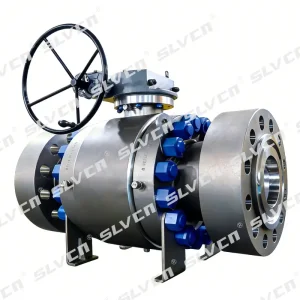
Why remote island systems prioritize in-line maintenance, corrosive sea spray protection, and zero-leakage configurations.
Antigua and Barbuda’s economy relies heavily on robust public utilities and terminal infrastructures. With projects centered around St. John’s Deep Water Harbour, Crabbs Peninsula, and municipal reverse osmosis desalination facilities (managed by the Antigua Public Utilities Authority - APUA), valve performance directly impacts national security and infrastructure reliability.
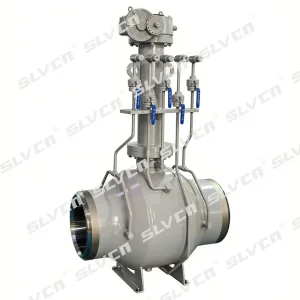
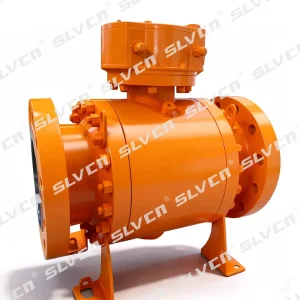
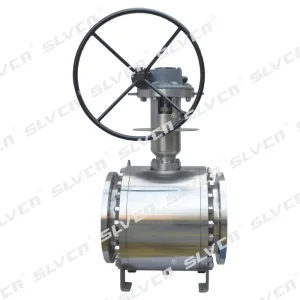
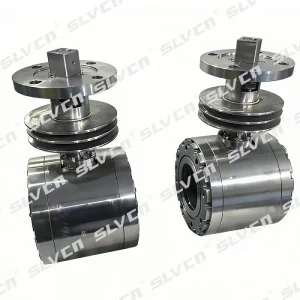
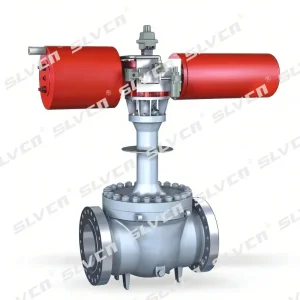
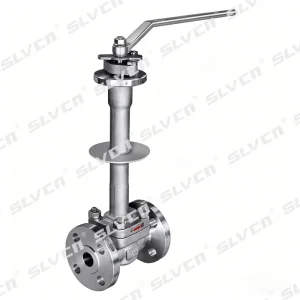
Top Entry Ball Valves play a crucial role in these setups. Unlike standard split-body ball valves, a top-entry design allows maintenance personnel to access the valve ball, seats, and stem seals directly from the bonnet without removing the valve body from the pipeline. On an island nation where logistics and spare parts pipeline transits from global manufacturers can take days or weeks, in-line maintainability drastically reduces downtime and keeps crucial fuel terminals and municipal water supply grids operating continuously.
Reverse osmosis plants handling hyper-saline Caribbean seawater demand high-alloy valve structures. We engineer top-entry valves in Super Duplex Stainless Steel (ASTM A995 5A/6A) and Monel to prevent crevice and pitting corrosion under constant exposure.
For heavy fuel oil (HFO) lines feeding electrical turbines, metal-seated top entry valves with Stellite 6 overlay provide bubble-tight double block and bleed (DBB) isolation, preventing cross-contamination and providing immediate pressure release.
Deep Water Harbour bunkering installations require rapid, reliable shutdown capabilities. Fully fire-safe certified valves (API 607 / API 6FA) safeguard transfer lines against thermal expansion and catastrophic pipeline failures.
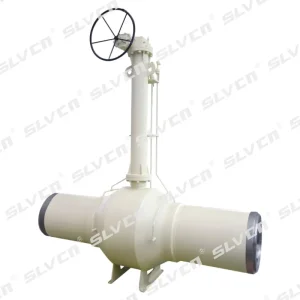
Deciding between Top Entry, Split Body, and Welded Configurations for Caribbean engineering layouts.
| Feature Parameter | Top-Entry Ball Valves | Split-Body (Side-Entry) Valves | Fully Welded Body Valves |
|---|---|---|---|
| In-Line Maintenance | Excellent (No pipe disassembly required) | Poor (Must be removed from pipeline) | Impossible (Requires cutting pipeline) |
| Primary Application | High Pressure, Corrosive Media, Fast Repairs | General On/Off Oil & Gas Distribution | Underground Gas Pipelines, Subsea Lines |
| Sealing Joints / Leak Paths | Single Body-to-Bonnet joint (Low risk) | 2 or 3 body split flange joints | No external body joints (Zero joint leak risk) |
| Cost Profile | Moderate - Higher initial forging cost | Lower initial purchase cost | Medium - Custom installation & welding costs |
| Typical Material | ASTM A105, LF2, F316, Duplex F51/F53 | A105, WCB, CF8M, CF3M | A105N, LF2, High-yield Steel |
Balancing rigid ASTM/API manufacturing standards with direct factory pricing and maritime logistics.
For Caribbean engineering procurement teams, sourcing critical-service flow equipment involves balancing quality assurance and transport speed. Our industrial valve manufacturing operations in China address these complexities through comprehensive supply chain integration:
Select from our certified industrial configurations built to withstand critical service stresses.
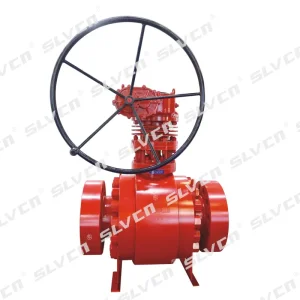
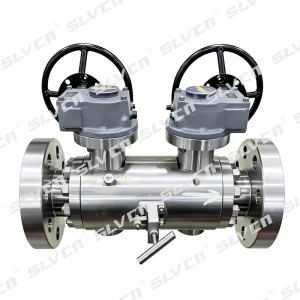
Expert technical insights to assist procurement managers and site engineers.
Desalination plants face severe scaling and corrosion. Removing a valve completely from the line to inspect internals requires shut-downs and pipe-line stress. A Top Entry design allows in-line removal of internals (ball, seats) via the bonnet, cutting inspection time from days to hours, keeping critical water supply networks online.
Every valve is certified to API 6D and pressure tested in accordance with API 598. For hydrocarbon and bunkering installations, we provide API 607 and API 6FA fire-safe certificates, plus complete material traceability reports conforming to EN 10204 3.1.
We apply high-integrity, corrosion-resistant coatings, such as thermal spray aluminum (TSA) or three-layer marine grade epoxy systems. Externally, standard components like bolting are furnished in stainless steel or fluoropolymer-coated high-tensile steel to prevent galvanic corrosion.
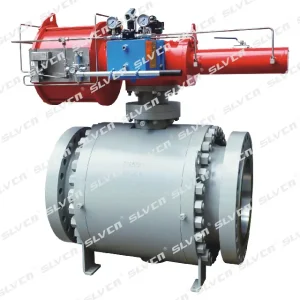
Yes. All of our valves are manufactured with standard ISO 5211 mounting pads, allowing direct mating with pneumatic, hydraulic, or electric actuator systems from major brands (such as Rotork or Auma), which are easily maintained by local Antigua and Barbuda engineers.
Connect with our expert design engineers for project calculations, custom material configurations, and secure maritime freight rates directly to your project destination.
Send Inquiry Now Shoulong Valve